Sunday, May 12, 2013

Blog 24: Exit Interview Questions

(1) What is your essential question?  What is the best answer to your question and why?


  • What is the best way to care for an animal that is to be rehabilitated back into it's natural environment? The best way to care for an animal is to have the correct initial approach on the animal to not stress it more and increase it's chance of survival. While habitat and records are essential as well in the rehabilitation process, you don't have to worry about habitat until the last stage of the rehabilitation process- says Debrah- a wildlife rehabilitator founder and director for 30 years.  Records are vital in recovery, but if you do not have the right approach on the animal, it will die before you make it to the last stages of record- and if the animal imprints- it cannot be released back into the wild. I would say the records come important in the treatment phase which would be somewhere in the middle, while as initial approach is essential through every step.


(2) What process did you take to arrive at this answer?

  • When I first discovered my first answer- through a multiple of articles as well as mentorship at the animal shelter- I knew that this would be my best answer. It just fit perfectly with every scenario of the rehabilitation process. Of course, habitat and records are essential; and my interviews conflicted me on which answer to choose- one didn't consider habitat much of an important factor while the other said to always keep it in the back of your mind through recovery. After I completed my animal handling and training course I had to check for signs of fear, stress, or contentness and determine whether or not I would socialize with the animal- it is important to socialize so when an important adopter comes in and wants to play with the animal- it will already be used to it. Even though this process is contradictory towards wildlife- they need to keep humans as predators where as domesticated animals need to trust humans- I think initial approach works on all kinds of rehabilitation methods towards animals . Without that connection you can never recovery the mental state of the animal and if it is wildlife- the over stress can kill it.


(3) What problems did you face?  How did you resolve them?

  • I couldn't get the experience I wanted with wildlife- where organizations really needed help, and where there was actual wildlife rehabilitation centers- they were usually out of state. And for the few opportunities I did have- at a raptor rehabilitation center, migratory birds, etc, their was a specific age requirement to work with the animals. So, I settled with working at an animal shelter- which corresponds towards my eq because, I am helping rehabilitate domesticated animals who have been abused, and neglected both physically and mentally to a state where they can be adopted into a 'forever home.' Dogs and cats show similar signs of stress, fear, towards humans as wildlife do when they feel threatened- though the repercussions are far less severe.


(4) What are the two most significant sources you used to answer your essential question and why?

  • Dr wildlife by Rory C Foster and my third and fourth interviewee's. The book takes you on a journey of a man who built himself up as a rehabilitator and gave real life scenarios on wildlife and human encounters- what cases they discovered,  and how they educated the public on how to approach the animals as well as how they treated them. Also, my third and fourth interview with Terry and Debrah both founders of their organizations- focus on initial approach. Relieving stress and creating a border line is very important.


(5) What is your product and why

  • My product would be the connections I made. I would never have known how many opportunities were out their to gain experience with wildlife and make a bigger impact on the world. It was such a great opportunity for me to talk to and interview wildlife rehabilitators most of which our founders of their centers! I applaud them for the hard work and dedication they set forth with their passion for animals every day. It is not a profession for money, it's a obligation for saving our creatures. Their are many possible internships that I am going to look up once the year is over and I am 18. I didn't have the opportunity to work with animals the way I wanted to because of my age, but I know where I would like to start.

Tuesday, May 7, 2013

Blog 23: 2014 Interview

Who did you interview and what house are they in?

I interviewed  Alfredo Pantera Nunez. He is in East house.


What ideas do you have for your senior project and why?

"Well i was thinking about two things, I'm not quite sure which would be easier or better. I was thinking Paintball because I love the sport and there's this small shop where i could possibly get an internship at for service hours. but I also wanted to do aeronautics because I love airplanes and flying, but i'm not too sure if i should do it from the engineering p.o.v or like a pilot kind of thing. I feel like aeronautics would be alot harder to find internships for though .

I replied,

There are some restrictions on what you can do, if the classes or equipment is too expensive or hard to get into. I would say stick with whatever you can be most passionate about in your two hour as well as for sure mentorship.


What do you plan to do for your summer 10 hour mentorship experience?

Well I have paintball equipment, and i mean i think i could probably play paintball as an independent component kind of thing, i'm not too sure what i'd do for the aeronautical mentorship. but i can find an internship at a paintball shop. And I think i can get pretty passionate with either topic.


What do you hope to see or expect to see in watching the 2013 2-hour presentations?

Hmm, that's a good question, I'd really enjoy watching my Cousins presentation? but i just want to see all the hard work and skills acquired over the four years at i poly.


What questions do you have that I can answer about senior year or senior project (or what additional information did you tell them about senior year or senior project)?

Think that's pretty much it,  I think the only question i'd have is a suggestion on which topic you think would make a better senior project.

I replied,

Well, You don't need to make a commitment over the summer, you're just trying it out and see if you like it/ can deal with it. I would stick with the paintball internship this summer and see how it plays out. You can look further into aeronautics, but it seems like a broad topic and very hard to get experience in.

Thursday, April 25, 2013

Independent Component 2


LITERAL:

 a) I, Reann Brownfield, affirm that I completed my independent component which represents 30+ hours of work.

 b) Cite your source regarding who or what article or book helped you complete independent component Baldwin Park animal shelter Monrovia Canyon Park

 c) Provide a digital spreadsheet

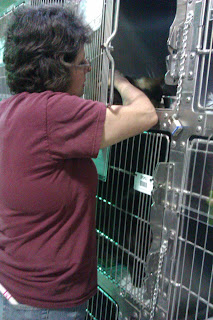
 d) Explanation of what you completed For my second Independent component, I've worked at the Monrovia canyon park on the habitat restoration team, pulling unnesceary plants that are harmful to the environment, at the same time discovering new things about the wildlife that live there, I even saw a few carcasses of deer- most likely a mountain lions prey. I've also been surveying the trails, helping out the rangers and will soon start working at the nature center. As for the shelter, I just passed my evaluation on handling dogs and cats at their facility and have been doing kennel clean.

Log

INTERPRETIVE:

Defend your work and explain how the significant parts of your component and how it demonstrates 30 hours of work. Provide evidence (photos, transcript, artwork, videos, etc.) of the 30 hours of work.


Before: Had a case of mange. 
After! 


After the kennel cleanings. 


Bunny exhibit! 


APPLIED:
How did the component help you answer your E.Q. or support on or more of your answers. Please include specific examples to illustrated how it helped.

  • The habitat restoration crew gave me insight on the animals environment.
  • The Baldwin park animal shelter taught me a lot about rehabilitation, for neglected and abused animals being "rehabilitated" back into a loving home. This is challenging both physically and mentally for the animal. You need to be able to interpret signs of stress, anger, happiness, etc. before approaching or allowing the public to approach. Once the animal get used to you, you can take it for walks, and take him to the play area, trying to get him used to the environment and less frightened of humans so they can be adopted- of course this is the opposite of my topic wildlife rehabilitation- the wildlife can not be friendly or trained to like humans. But it's the same concept in the rehabilitation phase. I also get to educate the public in both the Monrovia canyon park with how to approach wildlife, the trails, and environment while I give the public insight on adoptable dogs, what to look out for, if the animal is right for the family and encourage them to adopt the animal that has less of a chance at surviving.


Wednesday, April 24, 2013

Had a good day.

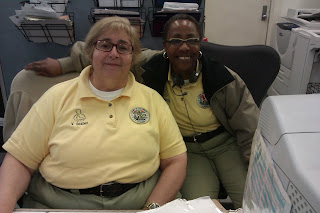
Long hard working day at the Baldwin Park Animal Shelter. Finally taking my evaluation test tomorrow, wish me luck! Also, here's the staff goofing off; He is rehabilitating a wild baby bird, updates on how he's doing!

Tuesday, April 23, 2013

Interview with Deb!

"Get your veterinarian degree- then you’ll have money and access. Wildlife rehabilitating is not an ideal profession to start off with you can’t make money. Take your mind on becoming a vet. You cannot waste a great mind- don’t waste it on something non profitable In order to help animals- you need to make money I’ve made an impact on the people that work here- I told them go on to a veterinarian field. Pay your bills. Great mind and big heart so I hope to hear great things from you soon." I was so touched and motivated after this very long interview! It took seven pages after sorting out all the notes! It made a very emotional impact on me, her story was so great. She started and made her own rehabilitation center in honor of her loving and proud son who died trying to help animals. His motto was- I want to help animals that can't help themselves. That nobody cares for. She's a respectable and proud rehabilitator whose been in her profession for over 30 years! She even worked hand in hand with Jane Goodall at the chamber boards of Africa studying chimpanzees and was good friends with her! This interview helped motivated me today, at a time where I thought I was at my lowest.